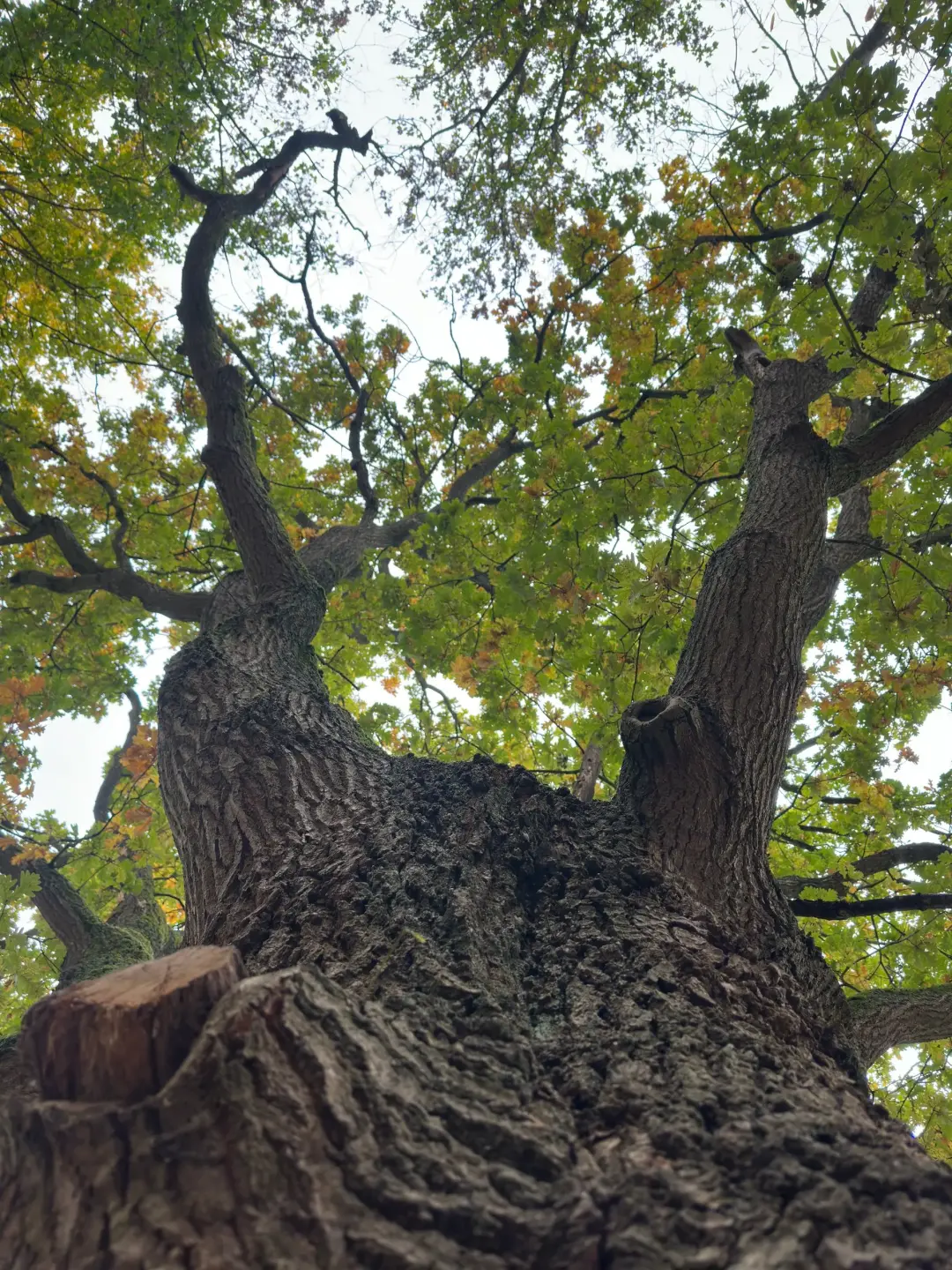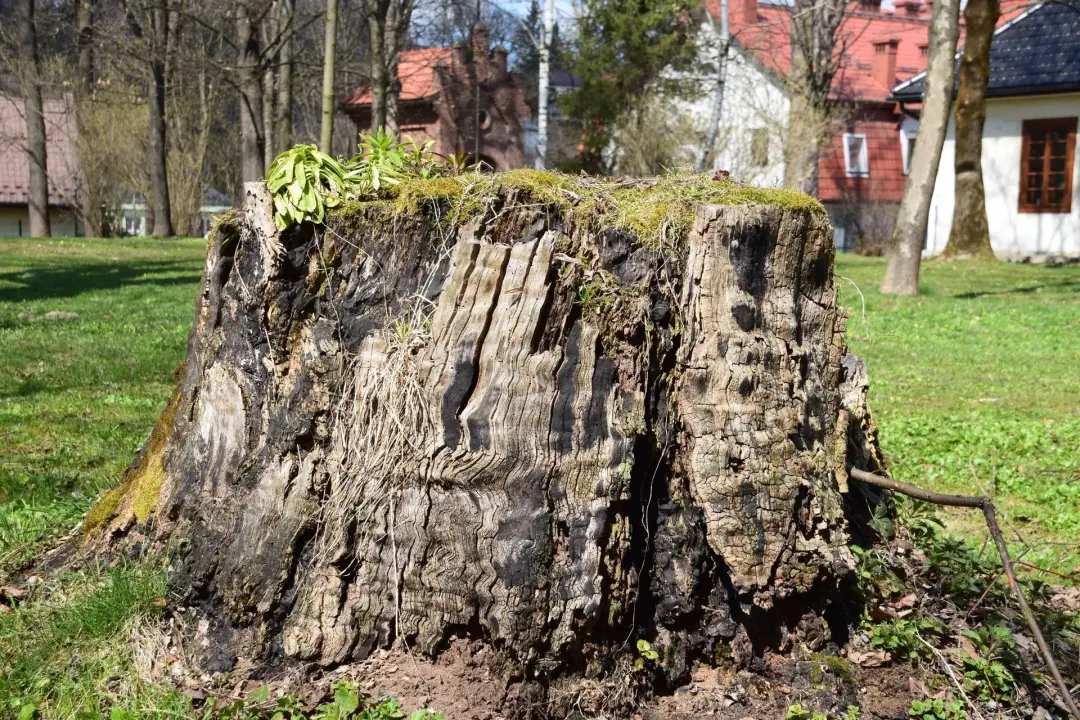
What Is Tree Stump Grinding?
Tree stump grinding is a mechanical process that breaks down the remaining base of a felled tree using a rotating cutting wheel. The machine removes wood progressively until the stump has been reduced to the agreed level. It produces loose woody material mixed with soil, rather than lifting the stump out as one solid piece.
The work usually focuses on the stump and an agreed area around its base. It should not be assumed to include every root extending through the garden. A stump can disappear from view while substantial roots remain underground, so the scope needs to match what the homeowner intends to do with the cleared space.
Grinding is often arranged alongside tree felling, but it can also be commissioned separately for an older stump. If the tree is still standing, discussing stump work in advance allows the contractor to plan both operations together. If it was removed years ago, photographs and approximate measurements can provide a useful starting point for an assessment.
The term describes the removal process, not the complete garden finish. A grinding service may leave the resulting material on site unless clearance and reinstatement have been included. Before booking, establish whether the quotation covers only grinding or also removal of arisings, replacement soil and preparation for the next stage of landscaping.
Stump Grinding vs Stump Removal, What’s the Difference?
Although contractors sometimes use “stump removal” as a general service description, physical extraction differs from grinding. Extraction involves digging out or pulling out the stump and associated major roots. Grinding breaks the wood down where it stands. Clarifying which method is being offered avoids assumptions about the amount of material that will remain underground.
Grinding can be useful where the aim is to eliminate the visible obstruction while limiting excavation around established garden features. Extraction may be more appropriate where a particular volume of ground needs to be cleared of substantial woody material. The decision depends on the future use of the area as much as the size of the stump.
For example, restoring a lawn may require a different level of clearance from installing a footing in precisely the same location. A builder or landscape contractor should define what their project needs before stump work is specified. Otherwise, the homeowner may pay for grinding and later discover that additional excavation is required.
Neither method should be described casually as removing every root. Fine and distant roots can extend beyond the practical working area, even after major excavation. Ask for a clear description of what will be removed, what is expected to remain and how the ground will be left, so competing quotations can be compared on an equivalent basis.
Reasons to Remove an Unwanted Tree Stump
An exposed stump can be a persistent obstacle in a frequently used part of the garden. It may catch a mower, force an awkward change of direction or be difficult to see when surrounding vegetation grows. Where the goal is an uninterrupted lawn or clearer route, removal can simplify everyday use of the space.
A stump can also constrain a new layout. Its position may prevent a bed from being extended, disrupt the line of garden edging or occupy a proposed planting location. Identifying the intended arrangement before removal helps determine whether only the central stump needs attention or whether a wider area must be cleared.
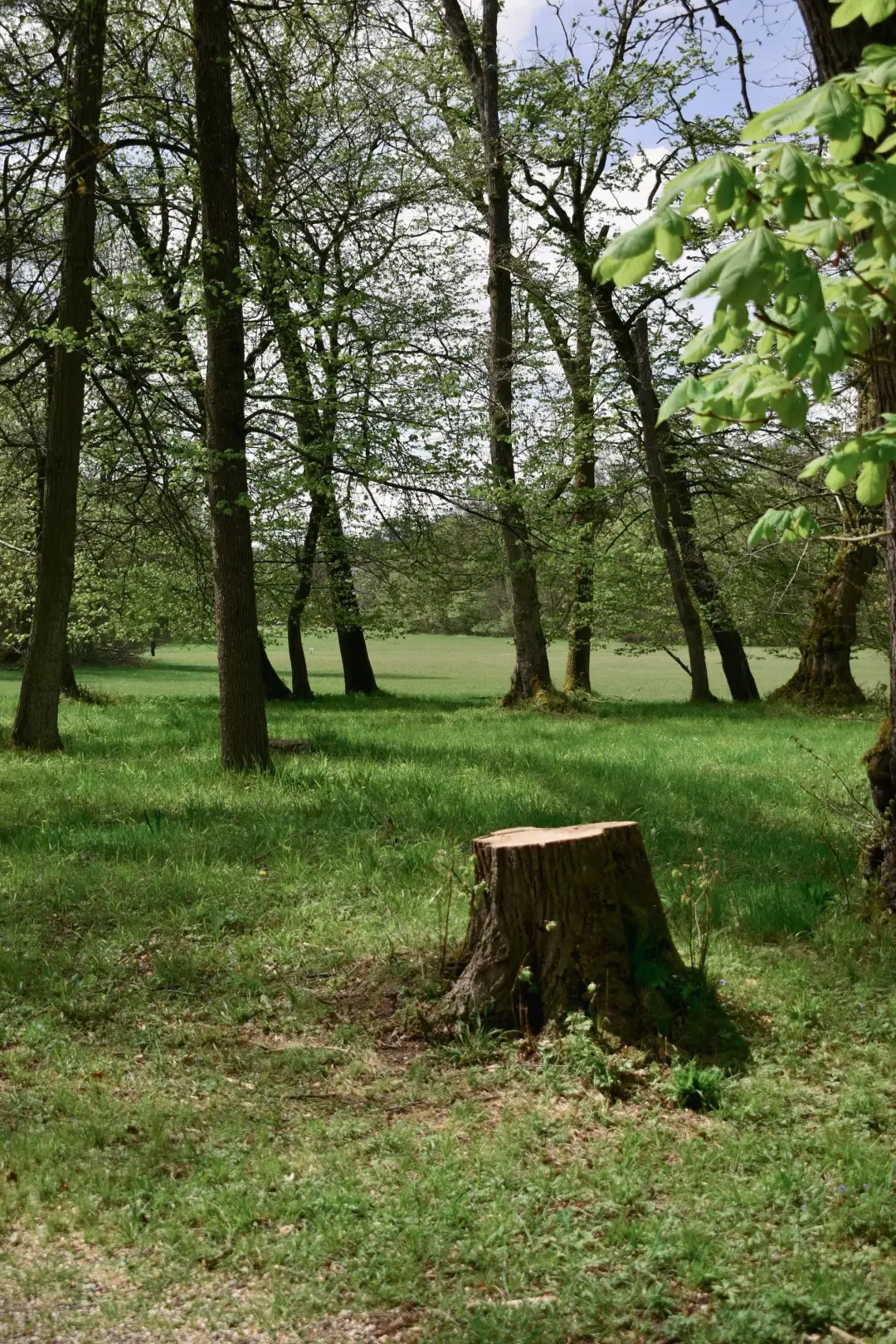
Appearance is another legitimate consideration. A prominent stump may look unfinished within a formal border or newly landscaped garden. However, the appropriate finish depends on the setting: a level lawn requires different preparation from a gravel feature or an informal planting area. Removal is most useful when it supports a defined improvement rather than leaving an unplanned bare patch.
Some stumps can instead be retained as wildlife habitat or incorporated into a garden feature. Their presence alone does not mean removal is necessary. If disease prompted the original tree’s removal, seek advice specific to that diagnosis before deciding what to retain, because the implications differ between diseases.
How Stump Grinding Machinery Works
A stump grinder uses a powered wheel fitted with cutting teeth to remove small portions of wood through repeated passes. The operator controls the cutting movement and progresses through the stump in stages. This gradual action distinguishes grinding from pulling or levering the root plate out of the soil.
Machines vary in size, drive system and cutting capability. Compact models serve restricted locations, while larger machines may be appropriate where access and stump size justify them. Manufacturers offer both wheeled and tracked designs, so equipment selection should reflect the whole site rather than simply choosing the most powerful available machine.
Preparation is an important part of the operation. The contractor assesses the working surface, checks for foreseeable obstructions and establishes protection against flying debris. Stones and embedded metal can create difficulties at the cutting head, while nearby windows or vehicles may require additional screening. These considerations help explain why setup can take a meaningful share of the visit.
Progress is not judged solely by whether the stump has vanished beneath loose chippings. The operator needs to establish that the agreed area and depth have been addressed. Homeowners should arrange to review the finished scope after the machinery has stopped and the contractor has made the area accessible, rather than approaching the cutting operation to inspect it.
Access Requirements for Small or Enclosed Gardens
The narrowest point on the route is often more important than the size of the garden itself. Gate openings, projecting hinges, downpipes and tight side passages can determine which machine can enter. Measurements should cover the actual clear opening, rather than the nominal width of a gate panel or the distance between fence posts.
Turning space also matters. A machine may fit through a straight passage but be unable to negotiate a sharp corner immediately beyond it. Photographs showing the route from the unloading position to the stump are particularly helpful, especially where there are several changes of direction or a confined area around the stump.
Ground conditions and level changes need separate consideration. Steps, steep slopes, weak paving, covers over underground chambers and soft lawns can complicate an otherwise wide route. Protective mats may help protect some surfaces, but their suitability should be assessed by the contractor rather than assumed to resolve every access problem.
Where access is restricted, discuss the alternatives before making changes to the property. A different machine may be suitable, or a removable fence panel may provide a more practical route if permission and reinstatement are arranged. Accurate access information at quotation stage reduces the likelihood of an unsuitable machine arriving or unexpected preparation charges being added.
Checking for Underground Pipes, Cables and Nearby Structures
Grinding extends beneath the surface, so buried services must be considered even when the intended depth appears modest. Electricity supplies to sheds, garden-lighting cables, irrigation lines and drainage can pass close to a stump. The absence of visible warning signs does not establish that the working area is clear.
Provide the contractor with any available service plans and information about previous garden work. Mention private installations as well as utility supplies, particularly anything added during landscaping or an extension. Plans are useful starting points, but HSE guidance explains that they indicate locations rather than guaranteeing the exact position of underground services.
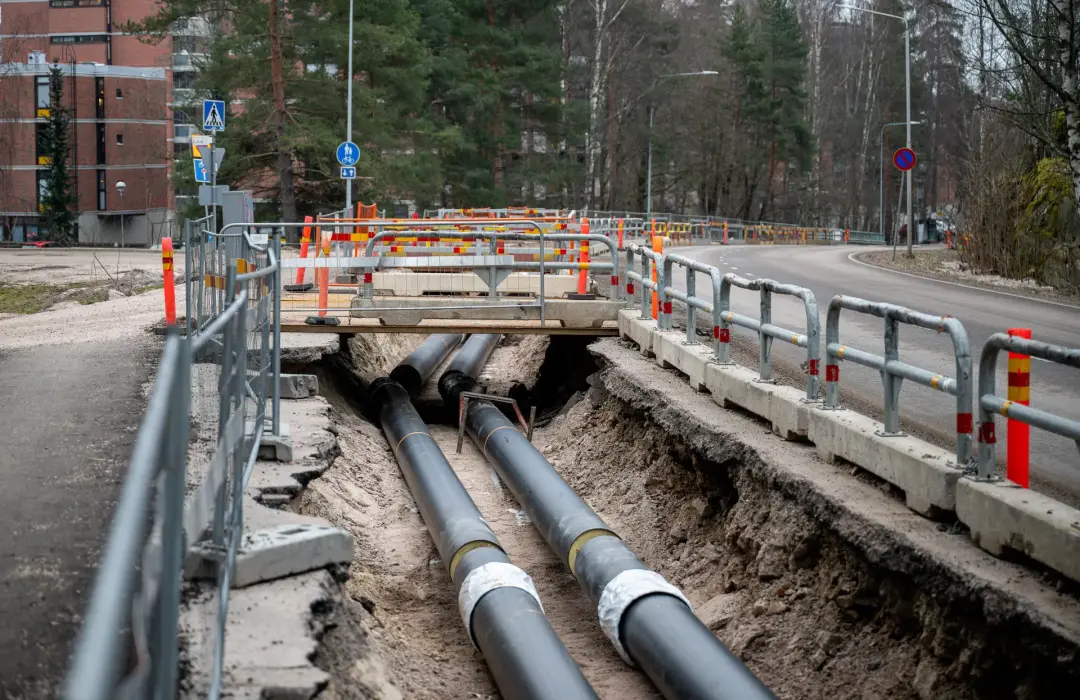
Where services may be present, the contractor should decide what further locating and verification are needed before proceeding. The appropriate method depends on the installation and site conditions; a single check may not identify every type of buried pipe or cable. HSE’s guidance on avoiding underground-service damage sets out the importance of planning, locating services and safe working methods.
Nearby walls, fence foundations and roots belonging to retained trees create additional limits. A grinder should not simply pursue every piece of wood where doing so could damage something that needs to remain. If an obstruction prevents the agreed work, the contractor should explain the restriction and discuss an alternative before extending the operation.
How Deep Should a Tree Stump Be Ground?
Grinding depth should follow the intended use of the ground. A shallow decorative covering, a healthy lawn and a new planting hole each need different preparation. Giving the contractor that information before requesting a price is more effective than asking for a standard depth and hoping it will suit a future project.
For general guidance, the RHS suggests approximately 20-25 centimetres below ground level for turf, with deeper grinding of at least 30 centimetres for replanting or landscaping. These are starting points rather than guarantees that every planting or construction requirement will be satisfied. Source: RHS stump-removal depth guidance.
Width is just as important as depth. A narrow depression beneath the centre of a stump may leave substantial woody flares around the edge, potentially interfering with a border or planting position. The specification should describe the area to be ground and make clear whether prominent surrounding roots are included.
Agree which ground level is being used as the reference, particularly on sloping ground or where the landscaping design will change existing levels. Machine capability, buried obstacles and site access may limit what can be achieved. If the intended use requires more clearance than grinding can reasonably provide, another removal method or a different layout may be needed.
What Happens to the Roots and Wood Chippings?
Roots outside the grinding area generally remain in place. Some will gradually decay, while living roots of certain species may produce suckers after the parent tree has been removed. Grinding the central stump does not guarantee that shoots will never appear elsewhere; the RHS notes that root injury can stimulate suckering in susceptible trees.
If new shoots appear, identify where they are coming from before deciding how to manage them. Their location and persistence can help a contractor distinguish growth from remaining roots from unrelated seedlings. Keep a record of repeated regrowth rather than assuming that every emerging shoot means the original grinding was incomplete.
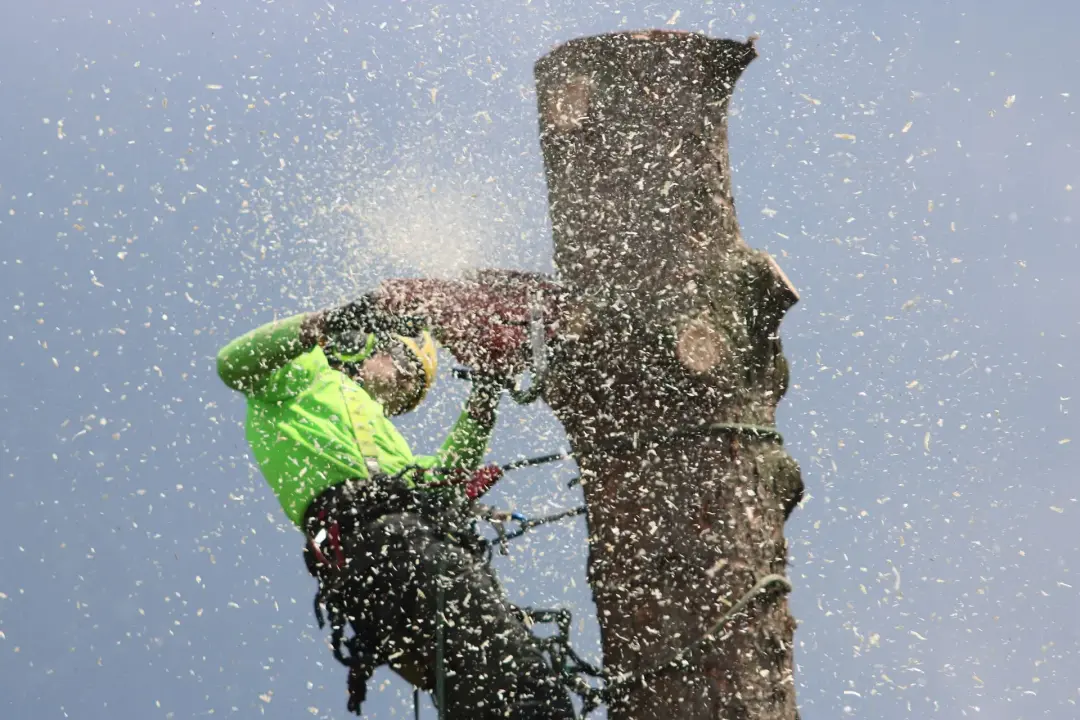
The grinding material usually includes soil as well as fragments of wood, so it may not have the appearance or consistency of purchased decorative bark. Before work begins, agree whether it will be removed, left in a pile or retained for an appropriate garden use. Any decision to reuse material from a diseased tree should reflect the diagnosis.
Fresh woody arisings should not be treated as a permanent substitute for soil in the hole. They shrink as they decompose, and incorporating substantial amounts into planting soil can temporarily reduce nitrogen availability. The RHS recommends using suitable soil for reinstatement rather than filling the excavation with sawdust.
Preparing the Ground for Turf, Planting or Landscaping
Begin by deciding who is responsible for the finished ground. The stump contractor may provide clearance and backfilling, or these tasks may belong to a separate landscaper. An explicit handover is particularly useful when several trades are involved, because a site ready for the next contractor is not necessarily ready for the homeowner to use.
For turf, aim for an even, settled growing surface that matches the surrounding lawn. Filling a depression immediately before laying turf can conceal changes that emerge later, leaving an obvious dip. Allow for inspection of the levels and any necessary adjustment before completing the surface, especially where substantial loose material has been removed.
For planting, assess the available rooting space and the conditions beyond the original stump hole. A replacement tree needs room appropriate to its root ball and future development; merely fitting into the ground-out centre is insufficient. Moving the planting position may offer more workable soil and avoid the densest remaining roots, depending on the garden layout.
Paving, sheds and other structures require preparation appropriate to their loads and design. Loose backfill over decomposing wood should not be assumed to provide a dependable foundation. Ask the installer to confirm their ground requirements before stump removal, so the excavation, replacement material and final construction can be planned as one coherent job.
Factors That Affect the Cost of Stump Grinding
The amount and condition of the wood influence the work involved. Diameter, remaining height and the spread of the stump base all matter, so a measurement across the cut trunk may not capture the full size of the task. Photographs that show both the top and the base help contractors assess what must be processed.
Access and setup can account for a substantial difference between apparently similar jobs. A stump beside an accessible driveway presents different logistics from one behind a house, beyond narrow turns and delicate paving. Machine transport, ground protection and the distance between the working area and the loading position should all be considered when comparing estimates.
The agreed finish also affects the price. Greater depth, a wider grinding area, removal of arisings and replacement soil each add work beyond reducing the visible stump. When several stumps need attention, request a combined quotation as well as a clear description of each one, allowing the contractor to account for shared travel and setup.
The most useful quotation states exactly what is included and how unforeseen obstructions will be handled. Confirm the grinding area, intended depth, waste arrangements, reinstatement responsibilities and whether applicable taxes are included. A clear scope makes the price meaningful and helps ensure the completed work leaves the garden ready for its intended next use.
If you're looking for a reliable tree surgeon in Birmingham, Wolverhampton, or Dudley, A&T Tree Services Ltd is here to help. From expert pruning and tree health checks to safe removals and emergency call-outs, our experienced team is ready to take care of all your tree care needs.